Swimming with sharks, the best season to explore the marine biodiversity of the Galapagos Islands
30/11/2022
Island to island, around the Galapagos in 15 days
10/01/2023Where can I see the most biodiversity in the Galapagos Islands?
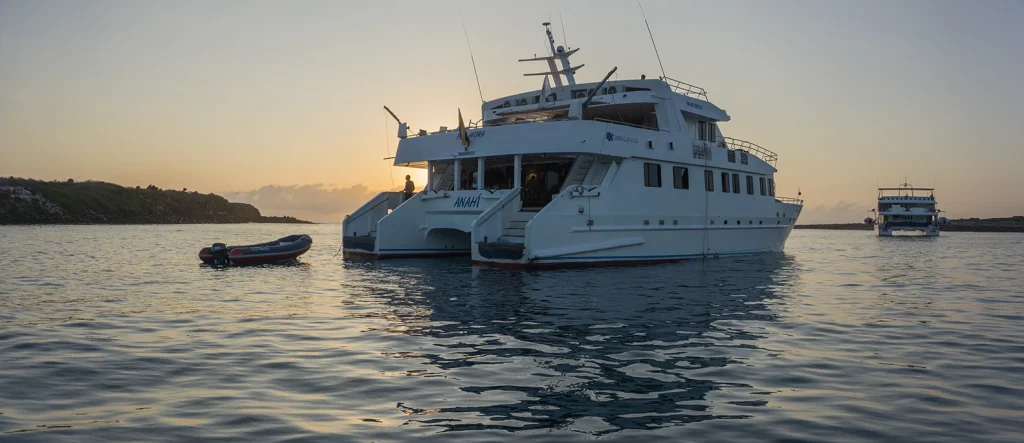
Whether traveling aboard a cruise, planning an Island Hopping Tour or embarking on a diving experience in the islands, you can enjoy the sea breeze and frigate birds flying over your yacht on any of these Galapagos adventure tours.
To make the best of your visit to the Galapagos Islands, it is important to check the seasons and the changing climate of the Pacific Ocean. Although the Galapagos Islands are located on the equator and the climate remains mild throughout the year, it can generally be divided into two seasons. The rainy season is considered from November to March with a humid and hot environment and temperatures varying between 26°C (78°F) and 28°C (82°F). The dry season, which extends from the months of April to October, is the favorite season for sharks, Galapagos tortoises, dolphins and millions of fish, since temperature drops between 24°C (75°F) and 14°C (57°F).
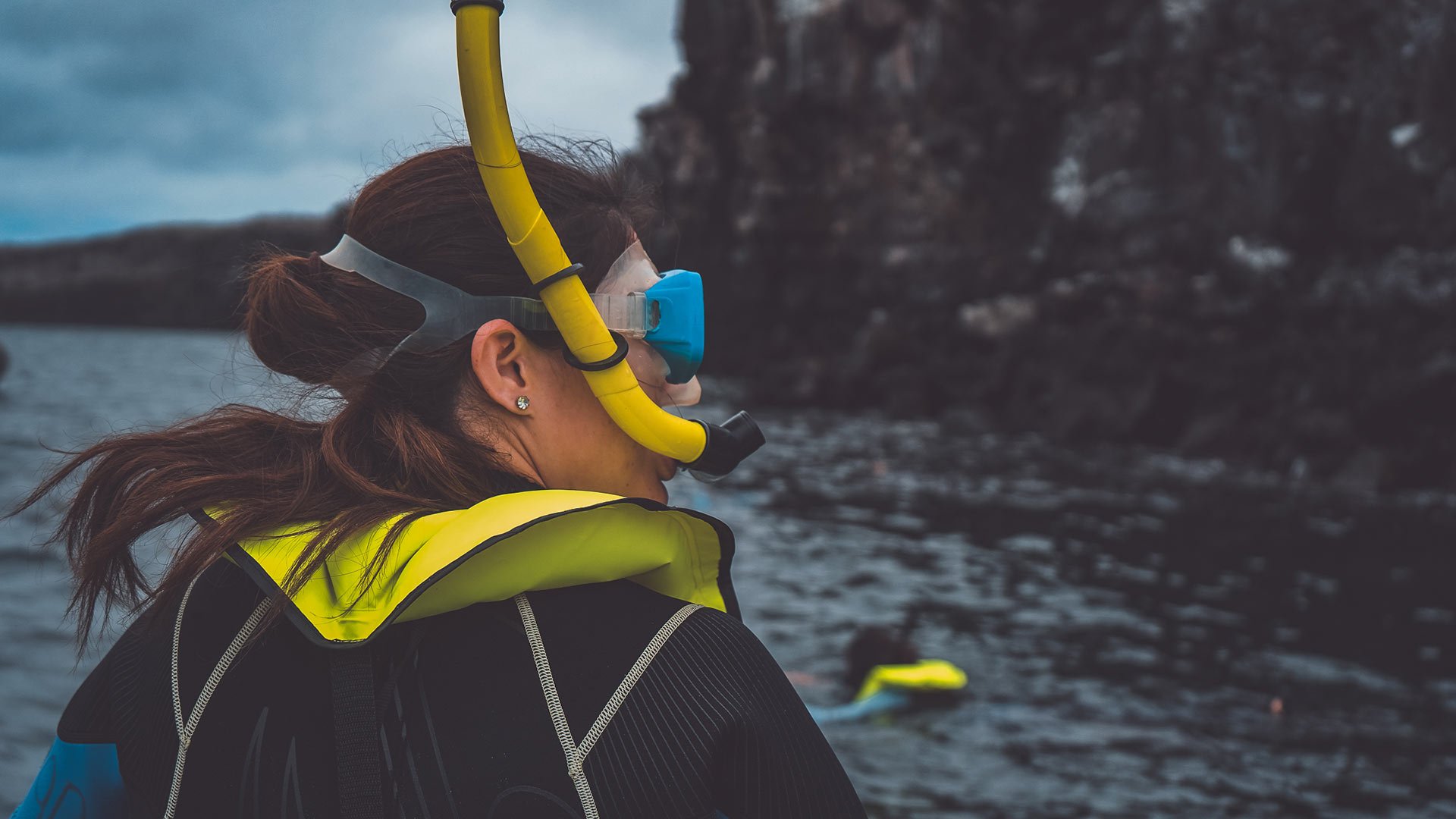
Life under the sea during the dry season is quite an adventure. Swimming in the middle of rock walls and submerged volcanoes you can find schools of fish that inhabit the great ocean and swim in harmony with hammerhead sharks, turtles, rays, white and black tip sharks, Galapagos sharks,and many more species.
Ocean currents are the pathways through which some species migrate to reach the Galapagos Islands. Being a strategic point where the Humboldt, Panama, and Cromwell currents converge, the islands are a fascinating place for their biodiversity. Although the list of places where you can see a variety of marine species is enormous, here are some of our favorite spots for snorkeling and diving so you can choose the ideal cruise for your adventure under the sea.

Kicker Rock Galapagos
Northwest of Puerto Baquerizo Moreno is Kicker Rock, a rock formation that you should consider on your Galapagos snorkeling tour. With around 149 m high, it is an ideal place for seeing sharks and if you follow your guide: without a doubt, an unforgettable experience in the world under the sea.
As you approach Kicker rock several frigate birds, blue-footed boobies and red-footed boobies welcome you. After anchoring you will see more bird species; this large rock formation becomes the meeting point for pelicans, Nazca boobies, petrels and lava gulls.
In this natural water passage, visitors snorkel and dive. Moving calmly you will see a great variety of Galapagos sharks, rays, and a multitude of fish species.

Between Darwin and Wolf Islands
North of the archipelago, are the islands Darwin and Wolf. An ideal place for diving. Sharks and rays swim in the archipelago: a refuge from poaching and fishing. Underwater you will see hammerhead sharks, Galapagos sharks, and white and black tip sharks.
Due to the abundant amount of food that the ocean currents bring to the islands, sharks choose this point as their favorite place in the archipelago. Hopefully you will see the great whale shark feeding on small fish very close.
During your diving adventure you observe the unique and amazing marine environment. Upon returning to your boat, your naturalist guide will give you information about the species you saw during your dive. During your experience you will see eagle rays, penguins and yellowtail fish up close.

Devil's Crown
Sailing to the north coast of Floreana Island we will find a strange volcanic cone in the shape of a gigantic crown forgotten in the middle of the surface of the Pacific Ocean to play the role of meeting point for the incredible marine species that swim around the Archipelago.
The Devil’s Crown is a favorite place for professional divers and enthusiastic visitors who choose a Galapagos snorkeling tours to dive with penguins, sea lions and of course white tip sharks, reef sharks, and hammerhead sharks Galapagos that sail in the center of the great crown.
Its vegetation composed of mangrove coral serves as a source of food and shelter for small fish. This underwater ecosystem is one of the most valuable on the planet, as it is not only home to amazing species, it is also one of the ecosystems that help us fight climate change.

Prince Philip´s Steps
A walk around Darwin Bay on Genovesa Island will take you to a huge 1.5 km long extinct volcanic caldera where the waters are deep and various tropical fish swim alongside Galapagos manta rays, eagle rays and hammerhead sharks Galapagos.
The vegetation covering this natural formation is mainly palo santo; therefore a great variety of seabirds choose this place to feed and from the ocean on approaching cruises you can observe red-footed boobies, masked boobies, storm swallows and more birds.
While some climb the rocky steps of “Prince Philip´s steps” to have a privileged view of the island and the horizon, others swim on the surface of the ravine and those who are experienced divers or love marine life manta rays snorkel or head to the depths of the caldera to enjoy the water temperature and the colors of the Galapagos parrot fish, butterfly fish, unicorn fish and royal angelfish.

The tunnels
As we head south of Isabela Island on our Galapagos yacht cruise, we see large caves in the form of volcanic rock arches coming out of the water, where fish and divers meet to be amazed and marvel at life.
The tunnels and rock arches were formed by lava and volcanic rocks that were eroded by water until they were hollowed out. Those who dive into the sea swim in the middle of subway tunnels, where several giant seahorses, Galapagos tortoises, Galapagos manta rays, white tip sharks and black tip sharks make this place a beautiful sanctuary for marine life.
Although the place does not present deep waters, its waves can be quite strong; for that reason divers arriving here must have a professional certificate and tourists should always be accompanied by the guide of their in Galapagos snorkeling tours Islands.

Vicente Roca Point
On a Galapagos yacht cruise that has Isabela Island on its itinerary you will arrive at Punta Vicente Roca, a stretch of land that enters the cold waters near Bolivar Channel, one of the most amazing places for marine life in the world; shorebirds such as Nazca and blue-footed boobies, penguins and brown pelicans rest on the cliffs of the eroded volcano. As you approach by boat and prepare to dive and watch the spectacle of life under the sea.
The variety of animals that navigate the Bolivar channel is vast and amazing, those who dive or snorkel see up close Galapagos dolphins, whales, various types of Galapagos manta rays, Galapagos tortoises and multiple coral fish, such as butterfly fish, Galapagos parrot fish, and the grunt fish.
Sharks also enjoy this place because of all the nutrients carried by the currents of the Bolivar channel, so while diving there is only one thing that is wonderful, the balance of nature, life in harmony, as all species are part of a living and beautiful ecosystem.
If you want to receive personalized information about promotions, fixed departures and the best dates to plan an unforgettable adventure in the Galapagos Islands in 2024 , subscribe to our Newsletter, you will receive a 10% discount on the tour you choose (restrictions apply).
Related posts